Monday, July 14, 2014

You are what you eat...

According to the Cystic Fibrosis Foundation website: 

CF Diet – In CF, a high-calorie, high-fat diet is vital for normal growth and development in children, and offers adults a way to maintain optimal health. The dietitians at CF Foundation-accredited care centers work with patients and their families to map out the best diet for each person.
Nutrition and general lung health are closely linked. People with cystic fibrosis may need extra calories to compensate for the malabsorption of nutrients. These extra calories also help to meet the greater energy needed for breathing. In fact, for children with CF, extra fat calories are good for fueling normal growth and development. 

There are right and wrong ways to maintain a high calorie diet.


Calories do not have to come from bad sources. There are ways to increase fats and calories while also increasing nutrition. There is a direct correlation between diet and health. The food that we consume serves as information to our body...when the body receives the information it determines how to use it. By sending our body incorrect information, we can confuse the metabolic process causing our health to decline. The nutrients packed in food enables the cells in our body to do their job. Food plays an important role in our growth, development, and maintenance. Without proper nutrition, the aspects of functioning can be negatively influenced. 

Here are some good choices that both incorporate high calorie and good fats:

Peanut butter- rich in protein, healthy fats, and aids in muscle mass buildup and cardiovascular health. Just two tablespoons of peanut contains appox 200 calories and upwards of 16g of good fat.

Avocados- rich in B6, C, E, K, potassium, magnesium, and folic acid and they have approx 380calories and 35g of fat (medium to large California avocado).

Olive Oils – have 124 calories and 14g of fat per tablespoon. The Mayo Clinic has findings that some research shows that MUFAs (monounsaturated fatty acids – healthy dietary fats) may also benefit insulin levels and blood sugar control, which can be especially helpful if you have insulin problems related to diabetes.

Eggs – 1 large egg contains 70 calories and 5g of fat with 6g of protein. Even though eggs sometimes get a bad rap for higher levels of cholesterol, the tradeoff is they are rich in natural B vitamins (B2, B6, and B12).

Nuts- help control blood glucose levels, rich in fiber and protein. One ounce has about 160-190 calories and 16g of fat. Mixed nuts are both rich in vitamins and minerals. My only concern here is that nuts are also high in dietary fiber, so watch out how many you consume in one sitting!

Bananas- rich in vitamin A, thiamine, B6, fiber, folic acid. Bananas have almost doubled the calories of other fruits- a large one has about 120 calories.

Granola- (w/nuts, whole wheat, molasses, honey)  loaded with fiber and essential oils, one cup is roughly 597 calories.

Dried fruit- loaded with calories, about 400 in one cup!

Various fruits and vegetables have calming effects on the cells, anti-inflammatory properties, and serve as antioxidants.

Health benefits of various fruits and veggies:

Carrots- beta carotene, anti-inflammatory effects, reduces bile and fat in the liver

Oranges – 1 large orange has 65mg of vitamin C, which helps push glycolysis and strengthens hair, nails, arteries and veins.  

Watermelon- vitamin C, antioxidant, muscle relaxant

Cucumber- vitamin K

Kiwi- natural enzymes (proteases), sleep aid

Apples- boost immune system, blood sugar regulation


It can be really hard to go from eating a ton of Twinkies, ice cream, and burgers to controlling your diet. I've slowly transitioned from junk food to healthy food with junk treats!

I try to eat kiwis and pineapples daily, they have natural enzymes (proteases) that break down the proteins. I've also started drinking Bolthouse Carrot juice mixed with orange juice. This really alleviates the late night coughing spells since carrot juice is super high in Vitamin A.

Having CF doesn't justify eating whatever you want. If anything, we should be more cautious with what we put in our body. Our bodies are sensitive and already weakened, by consuming so much processed junk, our bodies are working twice as hard to break that food down and maintain a pattern of homeostasis. When it comes to empty calories, we aren't really benefiting ourselves.

Know what you eat. Here is a great website to be able to look up different foods and their nutritional content. Let’s see what you all come up with for healthy choices!


Good eats! 

B.

Going on a vacation?

Paris, France 2007


It can be overwhelming, you know, living with CF and trying to maintain a normal life. We all like to live as carefree as possible, enjoy good food with great company, and take a nice summer vacation with our loved ones. I LOVE to travel. Unfortunately, I won’t be doing much of it until I finish my degree. I’ve been to France, Germany, Hawaii, Washington, Missouri, Florida, and Oklahoma (does that one REALLY count?!).

Like most people, I procrastinate. On everything, especially packing! To ensure you enjoy your vacation as much as possible, and with as little worry as possible, I’ve composed the following list to help.

-Talk to your doctor about where you’re going, when you’re going, and how you’re getting there. Some destinations (international) require additional vaccinations. In addition to that, your doctor can provide you with a certified letter stating your medical condition and a list of medications that you must take. This comes in handy at the airport when you take your nebulizer on board, medications, etc.  Organize your doctor’s note, list of medications, emergency contact list, and insurance documents in a folder and secure it. Ask your doctor about a Flutter (replaces the use of the Vest)

-Create an emergency contact list: doctors, nurses, family members, etc. Also be sure that those who are staying behind have a way to contact you.

-Make a list of medicines, supplies, snacks, etc. that you will need to take with you. If you have medication that needs to be refrigerated, invest in an insulated cooler or make prior arrangements for the flight, hotel, etc. Make sure all medications retain their original labels. Order refills before you depart to ensure the correct quantity of medication while you’re away.

-Pack extra tissue, toilet paper, lysol wipes and hand sanitizer

-Proceed with regular packing: clothes, sunscreen, walking shoes, sandals, extra towels, headphones, phone chargers, books, etc.

Resources:
The TSA offers special accommodations for those with medical conditions

Information for using o2, nebulizers, etc while in transit


I invested in a Pari portable nebulizer in 2007 and it is amazing. It comes with a car charger, carrying case, and wall charger. It's about the size of a cassette player (remember those?) and is very quiet when in use. 

Friday, July 11, 2014

Normalcy.


...Where to begin? 

Cystic Fibrosis is often referred to as an invisible disease. Those affected may look fine, sound fine, and overall, interact and perform like "normal" people. However, we are far from it. 

Our bodies work hard to simply breathe. We have to consume about 2.5x the calories of a "normal" person in order to maintain our weight. This means eating when we aren't hungry...forcing something down. In addition to that, a handful of pills with each meal, breathing treatments to alleviate pressure, mucus, and congestion throughout the day. Exhaustion. I can't speak for others, but I am always exhausted. Once I stop and let the daily momentum subside, I become aware of restlessness, fatigue, pain here and there. I have nerve damage from PICC lines. Shooting pains up and down my arms are a regular occurrence. Coughing fits that last from minutes to hours, the inability to comfortably sleep.

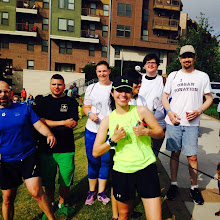
I recently received a message from someone regarding my personal, work, and exercise involvements. For those of you who follow me on IG or FB, you are aware that I am training for a 60 mile bicycle ride for the CF foundation. 

Why?

Why do I push myself beyond my limits? Why do I willingly wreak havoc on my lungs, joints, and mental processing? 

Because I want to be normal.I don't want to be treated any differently due to my genetic makeup. I don't want to be seen as using my illness as an excuse to passively live life. 

Yes, I am aware of the consequences. Yes, I have done too much and landed in the hospital. 

I've been hospital free for almost 1 year (last visit was only 4 days, no IV antibiotics at home, transitioned to oral upon discharge). 

I know my limits, but I also know my exceptions. 

Some inevitable day, I will succumb to the disease that so quietly ravages my body. The bacteria that are dormant can flare up and rob me of my life. 24 hours in a day and I strive to make every hour count...work...work harder...keep working, push, push harder. 


Every unexpected cough, every fuzzy x-ray, every "antibiotics for two weeks, CT scan in a week, follow up in a month" instills the fear that this it "it." The infection that will scar my lungs, require extensive IV antibiotics...

So,

please don't tell me I "do too much," or I'm "pushing it." I know my body. I know the consequences. I know that someday I may not be able to casually walk up a flight of stairs, much less ride a bike.


I know.


Sincerely,

B.

Wednesday, July 9, 2014

Pulmozyme Patient Assistance Program


Pulmozyme was one of the first medications I was prescribed after my diagnosis! Back in the day, they used to let us mix it with albuterol to decrease time spent on treatments. I also used to save the tops of the vials and turn them in at the clinic for prizes like gift cards!

If you take Pulmozyme, there is a great resource available to you. Genentech offers a co-pay program to help with out of pocket expenses. I just signed up and it took a few minutes. You enter your demographic information, answer a few questions, and you can print your co-pay assistance card immediately after your submission. The discounted amount varies depending on your insurance type, income, household number, etc. If you are on Tricare or Medicaid you may not qualify for this benefit.

Sign up here !

Hope this helps!


Thursday, June 19, 2014

Feature of the Week: Ashley Mead


"God grant me the serenity to accept the things I cannot change, to change the things I can, and the wisdom to know the difference."


Ashley was diagnosed with Cystic Fibrosis the day after she was born. She is a double delta F508 patient, one of the most common CF causing mutations.


She enjoys spending time with her 3 younger siblings and her 2 year old nephew. She loves to swim, hunt, and listen to music in her free time. Her siblings motivate her to stay healthy and strong despite her medical challenges. She maintains a positive attitude and strives to set an example of courage, faith, and strength for them to look up to.

One of Ashley's favorite memories was a hospitalization during the summer a few years back. Her friends were able to hang out (this was prior to the CFF's encouragement to stay away from others with the illness. Now, we are adamant about staying away from one another to avoid cross contamination) She describes this time as "one big slumber party." They made great memories and caused trouble for all of the nurses on the floor!


I asked Ashley what her advice would be to a newly diagnosed CF patient. She responded 
"No matter how dark it seems or how hard life gets just remember this too shall pass and there will be light at the end of the tunnel someday. Keep fighting!!!!"


Wednesday, June 18, 2014

621+1G->T

The only identifiable mutation that I have.

it is known as a splice mutation. A splice mutation inserts, deletes or changes the number of nucleotides. this type of mutation significantly disrupts CFTR protein production and results in little or no functional CFTR in the cell.


Characteristics of patient's with this mutation:

  • 94% of patients with this mutation have pancreatic insufficiency (compared to the 87% of all other CF patients)
  • pancreas does not produce enough enzymes, therefore the need for oral pancreatic enzymes is high
  • average sweat chloride test: 102 (other mutations: 97, a non CF'er: less than 60 mEq/l)
  •  a range of lung functions with FEV 1(%) varying from the low 20's -110


the information in this post was derived from www.cftr2.org

Tuesday, June 17, 2014

Glucose Tolerance Test

What to expect...Glucose Tolerance Test (refer to Cystic Fibrosis Related Diabetes (CFRD) )


The test is done in several stages, each one is important to ensure the accuracy of your results. You may be asked to fast for 8 hours (may vary depending on type of diabetes being tested, medical condition, and doctor's preference), during this time you should only water and avoid consuming any food. Even the smallest bite of an apple can throw off your body's natural blood sugar levels and lead to a false positive/negative. 
Upon your arrival, a certified staff member will take a sample of your blood to find your "baseline" sugar levels. They might prick your finger tip or draw blood from a vein. This sample is referred to as a fasting blood glucose level. 
Next, you'll be asked to drink a special glucose mix. Sometime (if you're lucky!) they'll give you a few options for flavors, orange, lemon lime, or grape are some of the flavors I've had. To be honest, they aren't that delicious. Think of it like a flat fanta or sprite! You'll have to wait an hour then they'll prick you or access your veins again. Sometimes it's best to ask for an IV so they can draw blood without pricking you 10,000 times. It's totally up to you and the nurse to determine if this is an option or if it's recommended. Your blood will be drawn at hours 1, 2, and 3!
Depending on your results, your doctor may request another test or refer you to a nutritionist.

sidenote: I would recommend bringing a good book, iPad, or something to keep you occupied while you wait! Also, during my last GTT, I felt so lightheaded from fasting that I was unable to drive home. Fortunately, I had a friend drive me to the appointment so I didn't have to worry about not being able to make it back safely. Plan a yummy lunch immediately after! Be sure to drink plenty of water. If you're dehydrated, your veins won't be as easy to access! Good luck! 
*this information is based solely off of my personal experiences*